CINO ism
CINOism Vol. 63, OKI and NTT East Accelerate Blue Carbon-Based Co-Creation Activities — Toward Sustainable Circular Communities
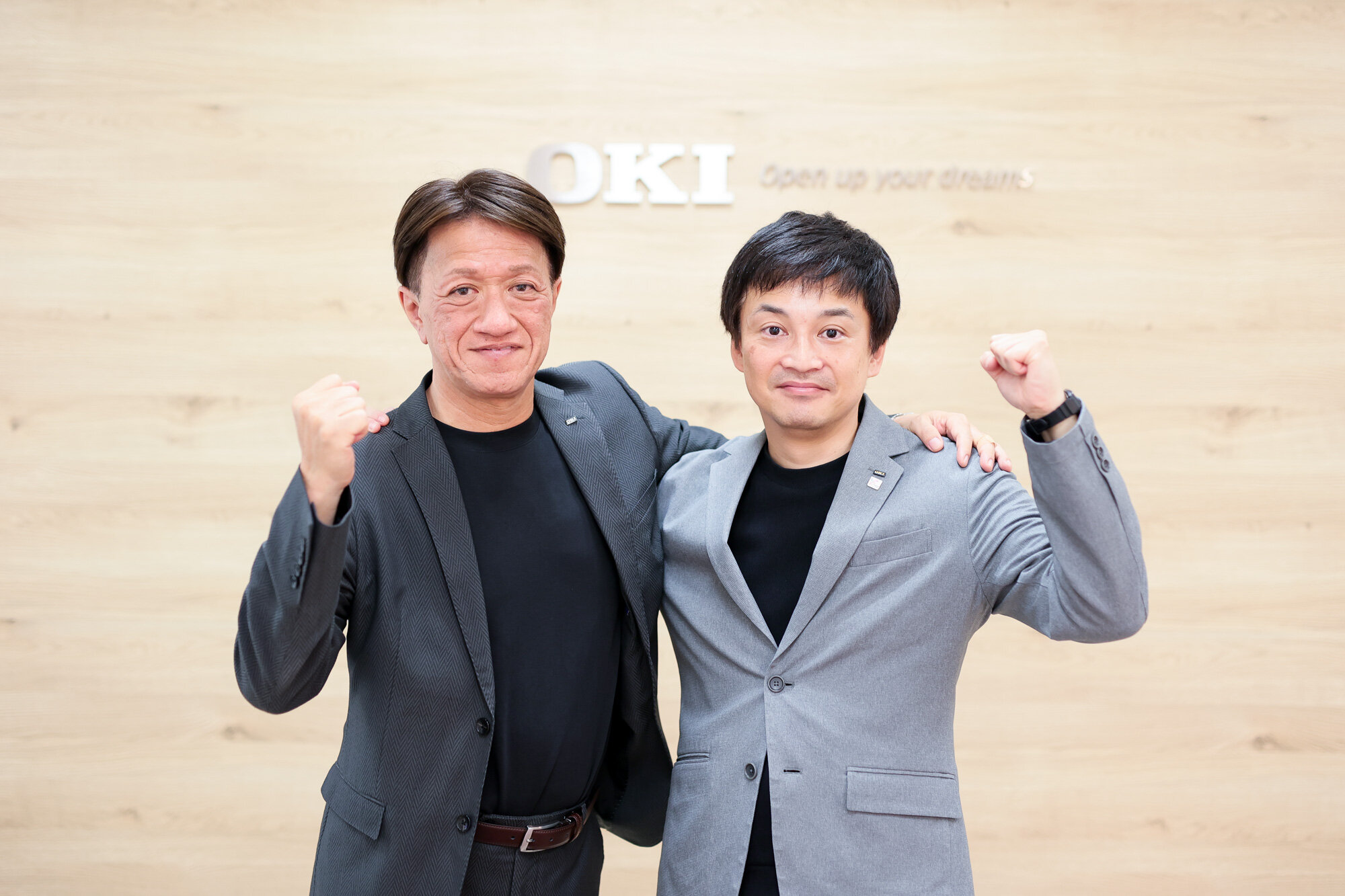
Right: Masaaki Okamoto, Co-Creation Promotion Department I, Innovation Strategy Division
Following NTT East’s endorsement of and deep resonance with OKI’s Blue Carbon Credit Project, ongoing since FY2023, the two companies launched a co-creation initiative to build a regional recycling model-based society starting from the sea. Sharing a common vision, OKI and NTT East are working together to address regional challenges while exploring new business opportunities and avenues for value creation.
To advance these initiatives, OKI and NTT East refine new business opportunities using processes defined in OKI’s Innovation Management System (IMS) — from opportunity identification to concept creation. In this issue, we speak with Senior Executive Officer Yuhiko Fujiwara, CINO and Head of the Innovation Strategy Division, and Masaaki Okamoto of the Co-Creation Promotion Department I, Innovation Strategy Division, about a field immersion program conducted in Hakodate, Hokkaido. Facilitated by NTT East, the program was designed to give participants direct exposure to the real-world challenges facing regional communities.
Ocean Digital Transformation Co-Creation Project Driven by Blue Carbon
—— What led to the field immersion program, and what were its objectives?
Fujiwara: For many years, OKI has used its strengths in underwater sensing technologies such as sonar systems to provide market solutions. Seeking to expand the application of these unique technologies, we developed an idea for highly accurate seaweed-bed monitoring for the blue carbon market. The idea won the Grand Prize in OKI’s FY2022 Yume Pro Challenge, encouraging us to validate its business potential.
As our research progressed, however, we found that the carbon market itself was still in its early stages. Meanwhile, interviews with fisheries stakeholders revealed a more pressing problem: local fisheries faced serious threats to business continuity due to labor shortages and climate change. Consequently, we expanded our focus beyond blue carbon to support the broader sustainability of local fisheries and develop circular business models.
Around the same time, NTT East, one of our long-standing customers, was advancing its own blue carbon initiatives while promoting a regional recycling model to foster a circular economy. Recognizing our shared vision, we launched a joint project focused on ocean digital transformation. As a first step, we collaborated with NTT East and Hakodate’s fisheries sector to conduct an in-depth field immersion program to better understand on-site challenges.
Okamoto: Our first priority was to understand what people in the fisheries industry truly needed. We conducted extensive interviews with local fisheries cooperatives, seafood processing businesses, and municipal officials. These discussions revealed not only well-known challenges such as labor shortages and declining fish catches, but also urgent issues faced by frontline workers. We felt that interviews alone were not enough to fully understand these realities and concluded that direct field immersion was essential.
The Essence of Fieldwork: Building Trust Through Local Engagement
—— What did you focus on most during the field immersion?
Okamoto: We focused heavily on communicating openly with local people on the ground in order to build relationships where candid conversations could take place.
We learned that many companies and research institutions had previously visited the area to conduct research; however, many of those initiatives had ultimately failed to deliver meaningful outcomes and were eventually discontinued. Consequently, we anticipated that local fishers and other relevant stakeholders might view research activities led by outside organizations with a degree of skepticism.
That is precisely why we decided to spend three full weeks on site, immersing ourselves in the local community — both to demonstrate our commitment and, at the same time, to place real importance on communicating with the people on the ground. For example, we actively participated in community gatherings and events, starting by simply building rapport with local residents. Throughout, we made a point of consistently telling people that we knew very little about the fisheries industry and asking them to teach us. We were also careful never to let our judgments be shaped solely by information gathered from reports and desk research.
With the cooperation of local fishers, we put on chest waders, entered the fishing grounds, and experienced seaweed harvesting firsthand. These activities helped us gradually build trust, which allowed us to hear their true opinions and concerns. I believe that was one of the most significant outcomes of the project.
Fujiwara: Mr. Okamoto has a remarkable ability to connect with people and build rapport quickly wherever he goes. Interestingly, when the idea that later became the foundation of this project won the Yume Pro Challenge Grand Prize, Mr. Okamoto had also entered the competition with his own proposal focused on agricultural digital transformation. Although his proposal finished as the runner-up, he is now working side by side with the winning creator to advance this project. His flexibility and openness make him such an unusually effective communicator.
Putting that aside, this field immersion program was carried out as “one team” with NTT East. I believe the local community was interested in this collaborative approach and that helped build trust.
Having participated in many fieldwork projects over the years, I know that earning the trust of people on the ground is always critical. Only by listening to honest feedback and experiencing the work firsthand can you uncover the underlying challenges and identify solutions that truly meet their needs. This principle applies to fisheries, agriculture, logistics, manufacturing, and virtually every other industry.
Challenges in Co-Creation and Transformation Toward Sustainable Fisheries
—— What challenges emerged as the field immersion program progressed?
Okamoto: Our fieldwork highlighted several serious challenges facing the fishing industry. Fish catches remain heavily dependent on environmental conditions, and the industry’s structure makes it difficult for fishers to translate hard work into fair market prices. This combination of declining catches and shrinking incomes is creating a negative cycle that discourages younger generations from entering the industry. Even those who do want to start a fishing business face high barriers to entry, including substantial capital investment, the need to acquire specialized knowledge, and the challenge of building relationships within local communities.
These issues cannot be solved by individual fishers alone. Rather, they must be addressed by the regional fisheries sector as a whole. That is why we believe it is vital to develop sustainable solutions in collaboration with municipalities, local food manufacturers, and other stakeholders.
Fujiwara: To do this, we have to focus on enhancing the value of seafood products themselves. Take kombu, a type of edible kelp, for example. In addition to its traditional use as a food ingredient, it has growing potential in supplements, pharmaceuticals, and cosmetics. Expanding into these new markets will require new distribution channels and business models.
At the same time, changing long-standing practices is never easy. Naturally, we encounter cautious views, and at times even outright opposition. This is something we see across all of our innovation initiatives. That is precisely why we must engage in ongoing, thoughtful dialogue and continue presenting practical proposals that earn broad support.
Future Outlook Based on Insights from the Field
—— What are the project’s future goals and plans?
Okamoto: Going forward, we will keep refining our understanding of the challenges facing the fisheries industry by repeatedly forming hypotheses from the field immersion program and testing them on the ground. Through this iterative process, we aim to develop solutions to the challenges facing the industry as a whole. Along the way, we also want to deepen our relationships with local communities, work together with stakeholders to put these solutions into practice, and give back to the fishers who have supported us throughout.
Ultimately, by addressing these on-the-ground challenges, we hope to revitalize local communities, advance the transition to a circular economy, and contribute to solving broader societal challenges.
Fujiwara: Japan is one of the world’s most resource-rich nations for marine products, yet the decline of its fisheries industry is a societal challenge we simply cannot afford to overlook. We aim not only to improve profitability — through higher-value-added seafood products and greater operational efficiency enabled by digital transformation — but also to go further, creating value through CO2 reduction by restoring seaweed beds. Through this, we hope to propose a scheme that generates a positive cycle for the entire region.
Looking further ahead, our ultimate goal is to show the next generation that the primary sector offers new possibilities and a future full of promise. To achieve this, we believe it’s important not only to leverage OKI’s own proprietary technologies, but also to co-create with leading companies such as NTT East, engaging a diverse range of stakeholders to drive meaningful societal impact.
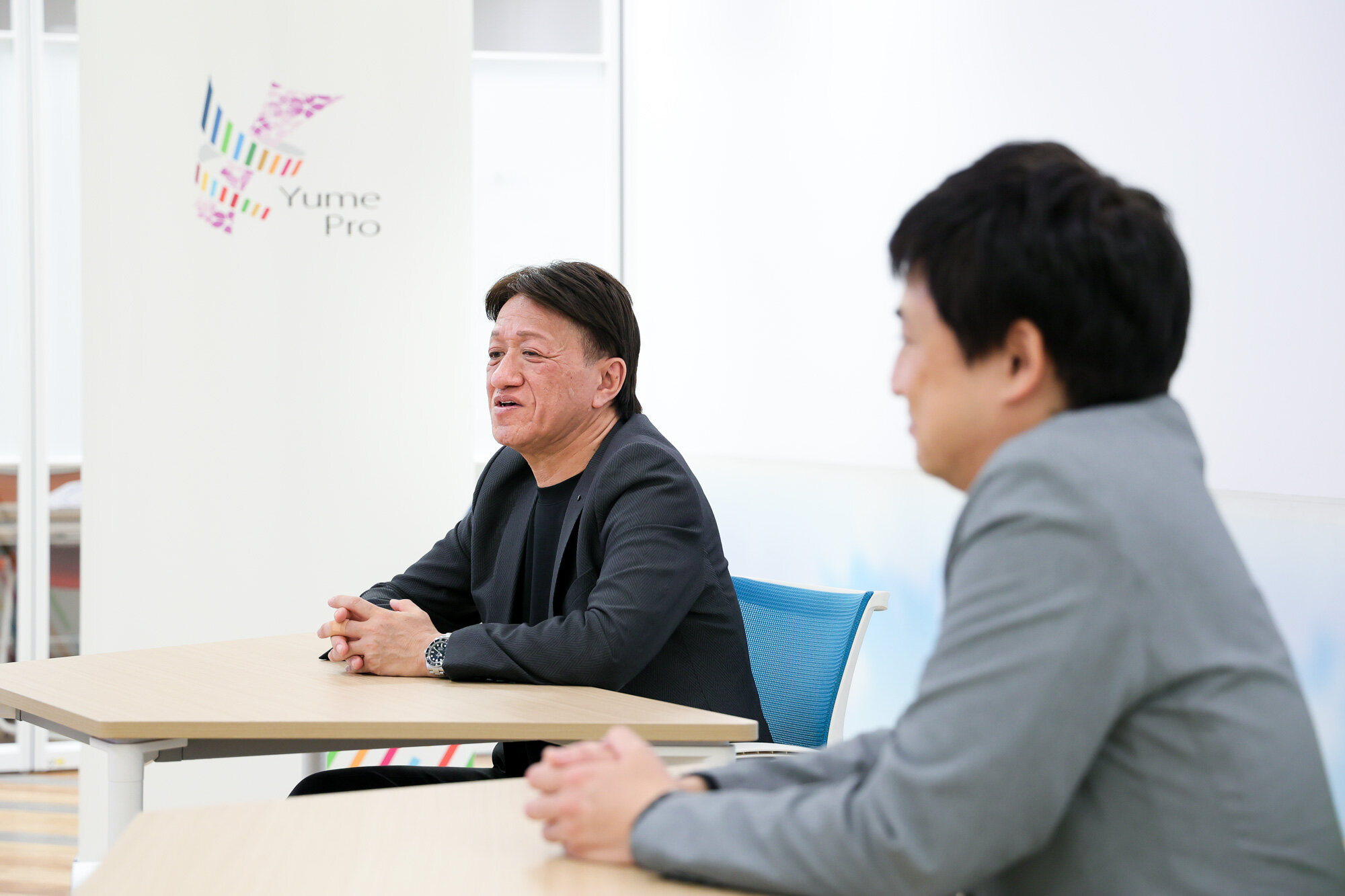
As of July 17, 2026: Yuhiko Fujiwara, Senior Associate Director, CINO* & Head of Innovation Strategy Division
* Chief Innovation Officer