Biodiversity
Basic Concept
Our society is deeply blessed by natural capital, such as soil, air, and water, as well as ecosystems of plants and animals. Biodiversity is deeply intertwined with these resources. The OKI Group's business activities also depend on biodiversity and natural ecosystems and may have an impact on them. In recent years, the worsening loss of biodiversity and destruction of natural ecosystems have called on companies to take proactive measures toward their conservation and sustainable use. The OKI Group utilizes the framework of the Taskforce on Nature-related Financial Disclosures (TNFD*1) to systematically assess and compile its dependence on natural capital and its impact on natural ecosystems in terms of its core business activities. Based on the results of this assessment, we will clarify risks and opportunities and set specific metrics and targets, thereby contributing to the conservation of biodiversity and the realization of a sustainable society.
*1 TNFD : An international organization established to create a risk management and disclosure framework related to natural capital for businesses.
Governance
To manage sustainability-related risks, including climate-related risks, and promote initiatives based on identified materiality, the OKI Group will appoint an Environmental Officer from among its executive officers starting in fiscal year 2023, strengthening environmental governance, including biodiversity. The Environmental Officer is responsible for formulating Group-wide policies and mid-term plans in the environmental field and for achieving the Group-wide plans. The Sustainability Promotion Department, a dedicated organization for sustainability, and the Sustainability Promotion Officer and each responsible department work together to manage and promote sustainability initiatives. Important sustainability issues are decided by the Executive Committee. The aforementioned promotion organization reports to the Executive Committee on the status and issues of environmental, social, and governance initiatives that embody materiality. Matters that have a significant impact on business are reported to the Board of Directors.
Strategy
In accordance with the TNFD LEAP approach, we identified the dependence and impacts on nature and ecosystems, primarily in the OKI Group's direct operations, and based on the results, identified risks and opportunities.
1. Discovering Connections with Nature (Locate)
We used the following external assessment tools to identify key biodiversity areas and priority areas for water risk at OKI Group's major business locations.
| Assessment Items | Identification method | Evaluation results |
|---|---|---|
| Key Biodiversity Areas | IBAT | This tool, developed by the United Nations Environment Programme's World Conservation Monitoring Centre and others, assesses biodiversity risks. It assesses whether important biodiversity areas exist near business sites. |
| Water Risk | Aqueduct | This assessment tool, developed by the World Resources Institute (WRI), visualizes water-related risks, such as water stress and depletion. |
As a result of our analysis, we identified important biodiversity areas within a 50km radius of our major business sites in Japan and overseas. While this analysis focused on a 50km radius around our sites, this does not necessarily represent the direct impact of our business activities. However, we did analyze the possibility that pollution and other issues associated with our business activities could have an impact on the natural environment and ecosystems. Furthermore, the water risk assessment did not identify any business sites that were deemed "high-risk areas" (evaluation scores of "HIGH" or higher). However, given that some of our business sites in Japan have annual water withdrawals exceeding 100,000 m³, our analysis highlights the need for efficient use and appropriate management of water resources.
2. Evaluate Dependencies and Impacts
Next, we identified and evaluated the dependencies and impacts on nature and ecosystems of our major business activities using the external assessment tool "ENCORE"*2. The heat map evaluation table is shown in Table 1.
*2 Tool for visualizing the dependencies and impacts of business activities on biodiversity and natural capital.
Table 1. Heat map assessment of dependencies and impacts on the OKI Group's major businesses
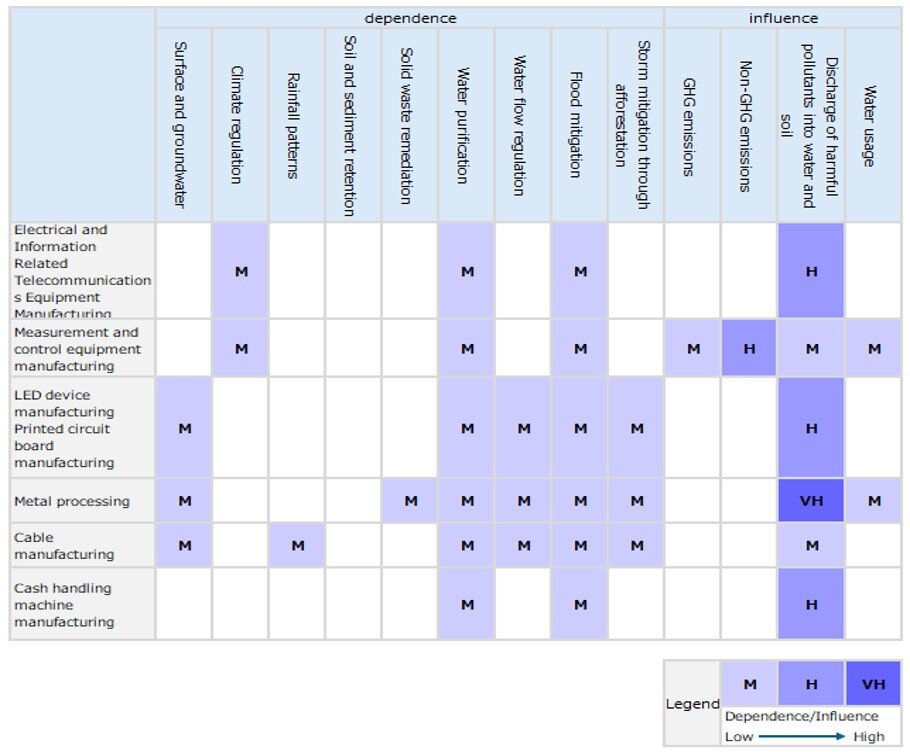
Table 1. Heat Map Assessment of Dependencies and Impacts for OKI Group's Major Businesses
| Dependencies/Impacts | High priority items | Verification results of biodiversity risks in business activities |
|---|---|---|
| Dependencies | Supplying and purifying water resources and regulating water flow | While our overall dependency on and impact on water resources is not significant, our business activities span a wide range of areas. In particular, our LED device, printed circuit board, metal processing, and cable manufacturing businesses tend to withdraw more water than other businesses and are more dependent on water resources. Water risks (water stress and water resource depletion) in the regions where these businesses are located are currently considered low, and we believe the current risk is limited. However, given our overall impact and dependency on water resources, we have determined that water resource management efforts are necessary across the entire OKI Group. |
| Flood and Storm Mitigation | As climate change progresses, global warming will accelerate, posing a risk of increasing the frequency of natural disasters such as floods and storms. The OKI Group has implemented and disclosed risk assessments and countermeasures related to these climate changes in accordance with the TCFD. (Already disclosed in the TCFD) | |
| Impact | Non-GHG Emissions | Our measurement and control equipment manufacturing business was assessed as having a high risk of impact. However, the impact is limited given the scale of our business and the number of sites affected. Furthermore, since emissions from this site are not significant, we have determined that the current impact is small and limited. |
| Water and Soil Pollution (Leakage of Hazardous Chemicals) | The OKI Group's entire business activities were assessed as posing a high risk of pollution to natural capital. Because our business activities include processes that use hazardous pollutants, we have analyzed the potential impact on natural capital and ecosystems if water or soil pollution occurs. Based on these analysis results, we believe that it is necessary to continuously monitor the use and emissions of controlled substances and implement appropriate management and emission control measures to prevent hazardous chemical emissions from business activities from leading to biodiversity loss. We also recognized the importance of actively promoting recycling, such as recovering hazardous chemicals contained in waste, to promote resource circulation and reduce the emission of hazardous chemicals. |
3. Risk and opportunity assessment
Based on the ENCORE analysis's findings on the dependency and impact assessment of OKI Group's business activities on natural capital and ecosystems, we categorized them into transition and physical risks and identified key risks and opportunities for each category.
| Category | Anticipated Events | Risk/Opportunity | Impact and Strategy |
|---|---|---|---|
| Transition Risk | Responding to stricter regulations | Risks | There is a risk that stricter regulations related to water usage, greenhouse gas emissions, and harmful substance discharges may increase operational costs and require adjustments in product development.
|
| Impact on the supply chain | Risks | As demands for environmental considerations from business partners and the market grow, there is a risk that failure to meet these requirements will result in loss of trust and competitive advantage.
|
|
| Establishing Sustainable Business Operations | Opportunities | Efforts to reduce water usage for securing water resources and lower harmful substance emissions to preserve ecosystem services can enable stable manufacturing site operation. | |
| Market expansion for Environmental contribution products | Opportunities | Accelerate entry into environmentally conscious markets by promoting environmentally contribution product designs and resource-saving processes | |
| Building trust with stakeholders | Opportunities | Advancing forest conservation activities boosts evaluation from local communities, employees, and investors. | |
| Physical Risks | Water Supply Risk | Risks | There is a risk that freshwater resources necessary for business activities could be constrained due to climate change or ecosystem changes.
|
| Increasing frequency of extreme weather and natural disasters | Risks | Ecosystem services such as flood mitigation and climate regulation may weaken, raising concerns about impacts to facilities and manufacturing activities due to extreme weather and natural disasters.
|
Risk Management
At least once a year, we identify recent climate change-related events, assess the impact, frequency, and timing of the risks and opportunities they pose, and identify their importance.
We consider countermeasures to these risks and opportunities, formulate a group-wide environmental management plan, and incorporate these into the environmental action plans of each organization and site. The implementation status of these plans is checked through internal audits and other means, and corrections are made as necessary. This process is managed in an integrated manner within the OKI Group's environmental management system.
Metrics and Goals
| Metrics | Factor or Ecosystem Service | Baseline Year | 2025 Target |
|---|---|---|---|
| Reduction in Water Usage | Water Resources | Previous Year | Reduction of 0.2% or More |
| Reduction in Chemical Substance Emissions | Water Soil Contamination |
2015 | Controlled Chemical Substance Emissions: 74,400 kg/year or less |
| Waste Recycling | Soil Contamination | - | Recycling Rate: 84% or More |
Reference Information : As part of our biodiversity conservation efforts, we also participate in forest volunteer activities (tree-planting activities)