OKIOpen up your dreams

Global

  • OKI Worldwide
  • Contact
  • Sitemap
  • Japanese Site
  • Chinese Site


Location: Home > About OKI > CSR > CSR in the OKI Group > Improvement of Customer Satisfaction > Expanding Application Range of Universal Design Technology


CSR

CSR in the OKI Group Improvement of Customer Satisfaction

Expanding Application Range of Universal Design Technology

The OKI Group's Approach to Universal Design

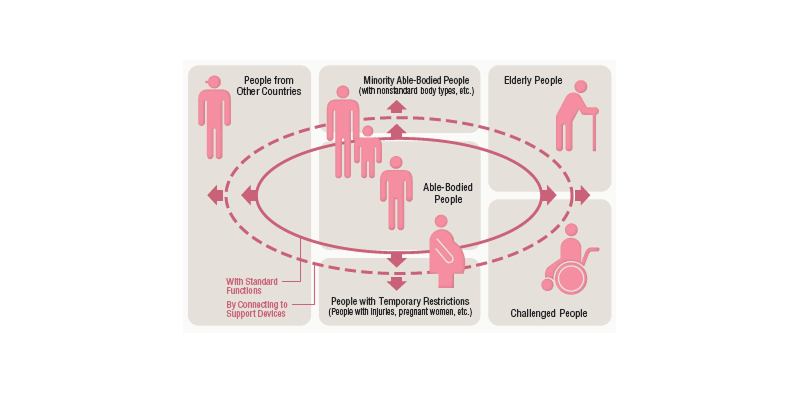
The OKI Group defines universal design as the achievement of a high level of usability (basic user-friendliness) and accessibility (considerations for elderly people and people with disabilities) in products and services so that all customers can use them properly, effectively and satisfactorily.

The OKI Group's efforts to enhance usability and accessibility are based on four concepts. First, products must have interfaces that are easy to understand. Second, mental and physical stress on users must be minimized. Third, there must be choices of operating procedures. Fourth, products must be designed in a friendly and attractive package. In order to promote universal design, OKI established a cross-functional organization called the Ergonomics Committee. The committee conducts verification tests and collects opinions from users which help shape products and services.

Universal Design Intended for the Use of as Many People as Possible
Supporting the Improvement of the Direction Board System of a Special-Needs School Utilizing Universal Design

The OKI Group supported the renewal of the direction board system of Tokyo Metropolitan Hachioji Higashi Special-needs School. Since the school has committed to creating a learning environment that assists the visual function of challenged students, it has organized a special project team and addressed the improvement of the direction board system at the school since fiscal 2010. Universal Design Department of OKI and OKI WorkWell, a special purpose subsidiary of the OKI Group, have worked with the school for this project, conducted an on-site survey, analyzed the circulation in the school and students' viewing habit, and designed a direction board with pictograms. We also offered our advice on the appropriate installation position for the direction board in order to secure adequate visibility for both wheelchair users and walkers. We will continue to support the school's project to assist the visual function of its students.


Direction board with pictograms

Top of this page